

GCGA
GCGA Blog
The History of Creative Pet Grooming: From Ancient Function to Modern Fine Art
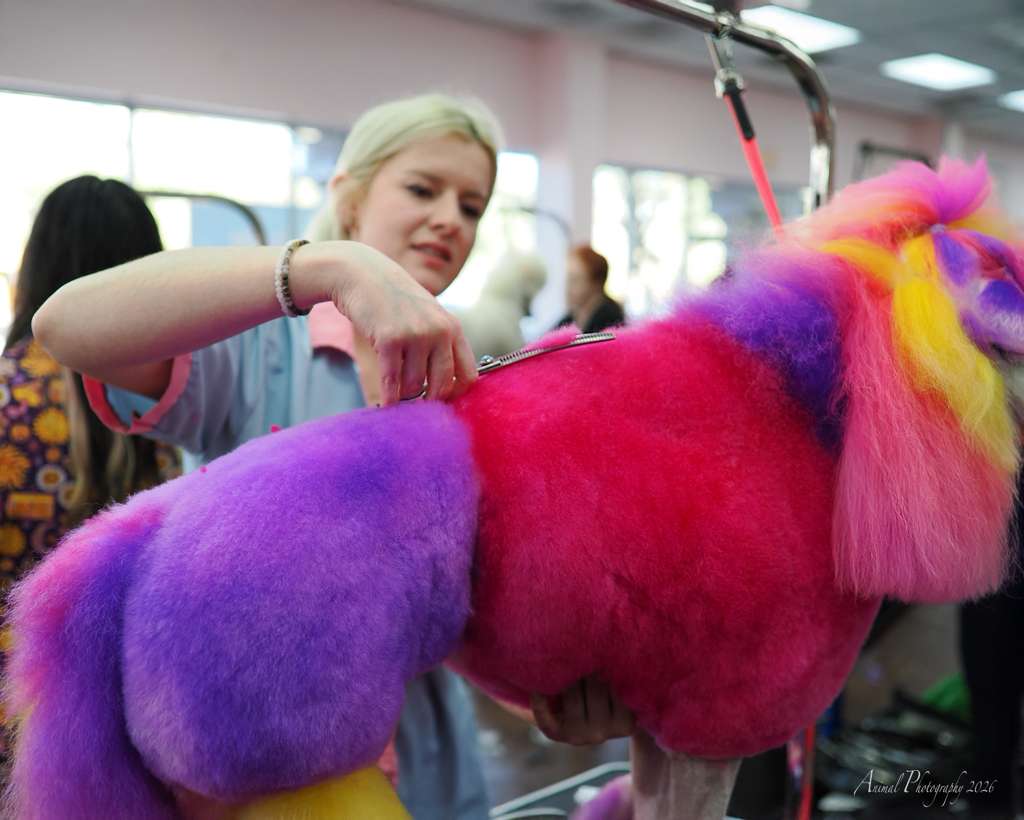
Creative pet grooming is often misunderstood as a modern novelty, yet as history shows, it is the contemporary expression of a long-standing human tradition. This practice involves the care, ornamentation, personalization, and artistic presentation of companion animals. To understand creative grooming fully, it is essential to recognize that dogs were originally bred for specific working purposes. Over thousands of years, humans shaped dogs to herd, retrieve, guard, hunt, and protect. Their form, coat, and temperament were intentionally designed to meet human needs. As functional demands on dogs have shifted in modern society, creative grooming has evolved as a way for humans to express their bond with companion animals.
Ancient Origins: Care, Identity, and Ornamentation
Ancient Egypt
In ancient Egypt, dogs and cats were groomed, adorned, and revered. Tomb paintings, burial practices, and archaeological evidence show that grooming went beyond hygiene to include aesthetic presentation and symbolic meaning. Animals were groomed using combs and oils similar to those used by humans. Decorative collars were common and often personalized. For example, a collar from the tomb of Maiherpri (New Kingdom, c. 1400 BCE) was decorated with lotus motifs and inscribed with the dog’s name. The Berenice pet cemetery further reveals animals buried with collars and ornaments, highlighting emotional bonds and care beyond life. These examples demonstrate one of the earliest intersections of animal care, ornamentation, and identity.
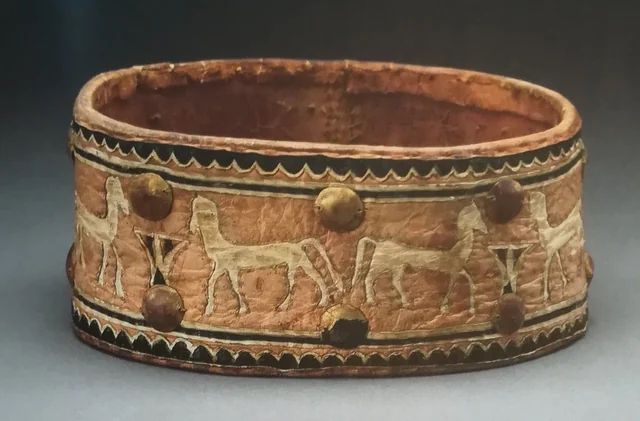
Copper and leather dog collar from the tomb of Maiherpri in the Valley of the Kings, Egypt, 14th century BCE
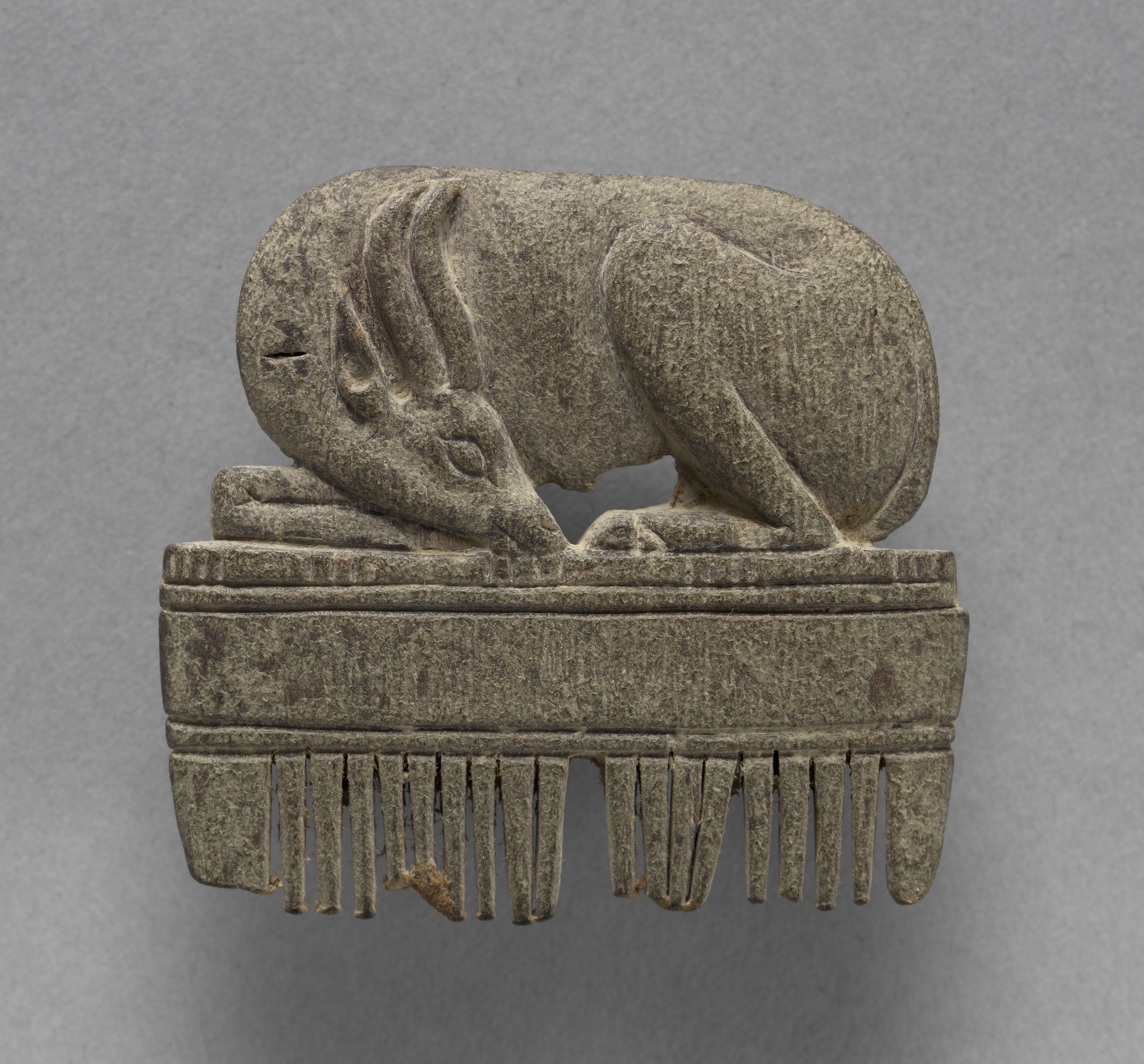
Comb with Gazelle, c. 1391–1353 BCE. Egypt, New Kingdom (1540–1069 BCE), Dynasty 18, reign of Amenhotep III (1390–1352 BCE). Wood; overall: 5.4 x 5.7 x 0.4 cm (2 1/8 x 2 1/4 x 3/16 in.). The Cleveland Museum of Art, Gift of Jean-Luc and Véronique Chalmin 1995.90
Mesopotamia, Greece, and Rome
In Mesopotamia around 3000 BCE, cylinder seals and figurines depict dogs wearing collars, indicating ownership, protection, and symbolic value. In ancient Greece and Rome, dogs appear in pottery, mosaics, and funerary art wearing collars ranging from utilitarian to decorative. Roman collars sometimes included inscriptions, offering early examples of personalization. Across these civilizations, collars functioned as practical tools and visual markers of status and human–animal relationships.
Function Becomes Style: Europe and the Poodle
During sixteenth- and seventeenth-century Europe, poodles represented a pivotal moment in grooming history, bridging function and aesthetics. Originally bred as water retrievers, they were clipped to improve swimming efficiency, while hair on joints and vital organs was retained for protection and warmth. As poodles entered aristocratic households, these functional trims evolved into stylized “lion clips.” What began as practical grooming gradually became ornamental expression and social signaling, reflecting a broader cultural shift as dogs moved from fieldwork to domestic companionship.
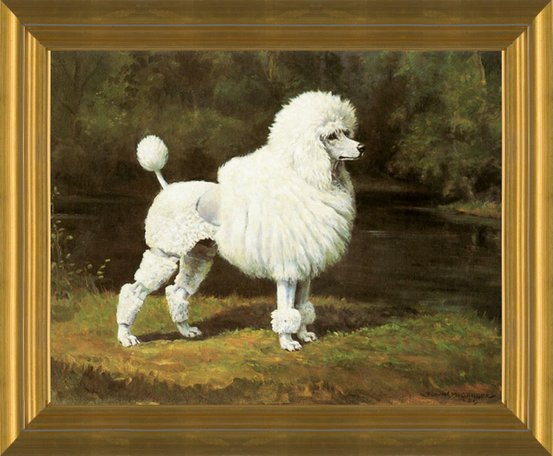
Oil painting, “Champion Blakeen Eiger, Poodle” by Edwin Megargee (1936)
Ornamentation as Fashion: Medieval to Victorian Eras
Medieval and Renaissance Europe
Manuscripts, tapestries, and stained glass frequently depict dogs wearing decorative collars and bells. Noble households adorned dogs with leather, silver, or gold collars. Bells served symbolic purposes, including protection and spiritual warding. Engraved collars bearing owner names or heraldic motifs became common. During this period, grooming reinforced the role of dogs as companions and status symbols rather than purely working animals.
Victorian Era
By the nineteenth century, companion dogs, especially toy breeds, were dressed for portraiture and social display. Grooming emphasized silhouette, texture, and presentation, establishing pets as aesthetic companions. This era laid cultural groundwork for modern creative grooming, reinforcing the idea that animals could be styled for beauty and identity.
Spanish and Latin American Traditions: Celebration and Cultural Expression
While European and Egyptian practices emphasized status, Spanish and Latin American cultures historically treated dogs as cherished companions and cultural icons. In Spain, decorative grooming was tied to festivals, public events, and family rituals. In Latin America, particularly Mexico, hairless dogs like the Xoloitzcuintli were adorned with color and ornamentation for spiritual, ceremonial, and celebratory purposes. These dogs were honored during pet holidays and community rituals, and vibrant pigments symbolized festivity, protection, or cultural identity. Decorative grooming in these regions was both a form of cultural expression and a way to strengthen emotional bonds with animals.
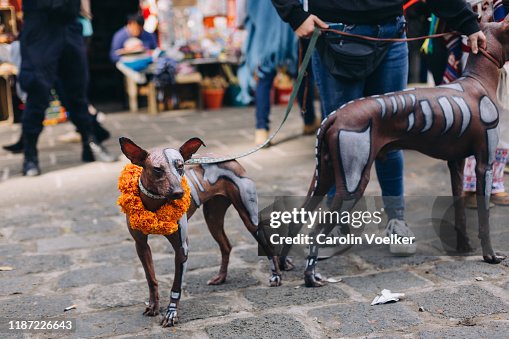
Mexico, Michoacan, Patzcuaro - November 2, 2019: Two Mexican hairless dogs, also called Xoloitzcuintli, painted as skeletons for the day of the dead and adorned with African Marigold.
The Emergence of Creative Grooming in the Twentieth Century
Modern creative grooming emerged in the United States alongside professional grooming competitions. The All American Grooming Show, founded in the early 1970s, introduced creative styling categories around 1980. Jerry Schinberg is widely credited with formalizing creative grooming as a competitive art form. Groomers explored sculptural clipping, themed designs, and eventually color. Unlike historical ornamentation, which relied on collars or clothing, creative grooming integrates art directly into the coat, transforming the animal into a living canvas.
By this point, many dogs had shifted from labor roles to companionship. Creative grooming became a modern way for humans to spend intentional, bonding time with their pets. The tradition of using color to celebrate dogs, exemplified by the Xoloitzcuintli, shows that creative grooming continues culturally embedded practices of celebration and expression.
By this point, many dogs had shifted from labor roles to companionship. Creative grooming became a modern way for humans to spend intentional, bonding time with their pets. The tradition of using color to celebrate dogs, exemplified by the Xoloitzcuintli, shows that creative grooming continues culturally embedded practices of celebration and expression.
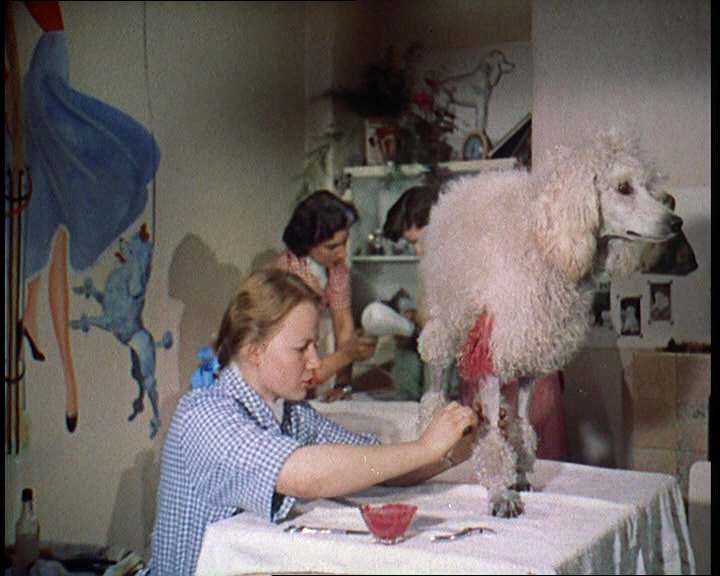
Groomer applying pink vegetable dye to a poodle, 1955
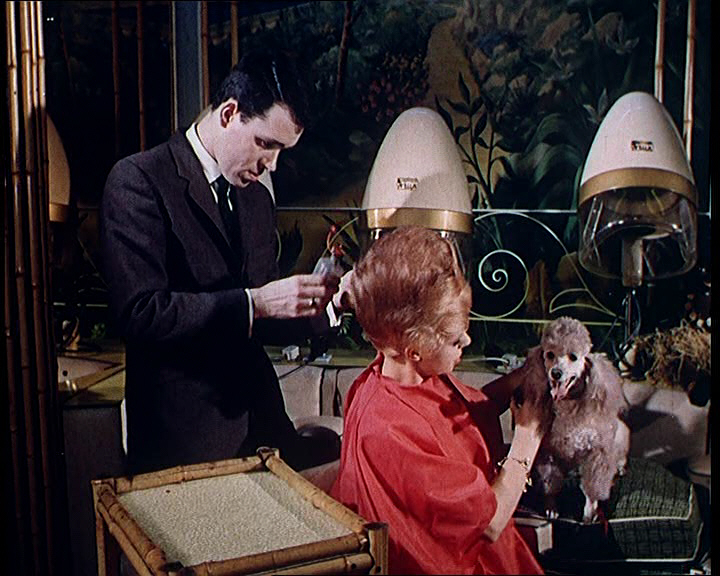
Owner and her pet toy poodle with temporary color applied to their hair, 1963
Modern Creative Grooming as Fine Art
Today, creative grooming exists at the intersection of ancient ornamentation, functional grooming, fashion, and fine art. High-profile groomers and global competitions bring visibility to the craft, while professional standards emphasize that artistry must never compromise animal welfare. Creative grooming is recognized as a specialized discipline requiring technical skill, ethical awareness, and knowledge of animal-specific needs. In contemporary society, where companionship has replaced labor as the primary role of most dogs, creative grooming reflects the evolution of the human–dog bond and continues traditions of cultural expression from around the world.
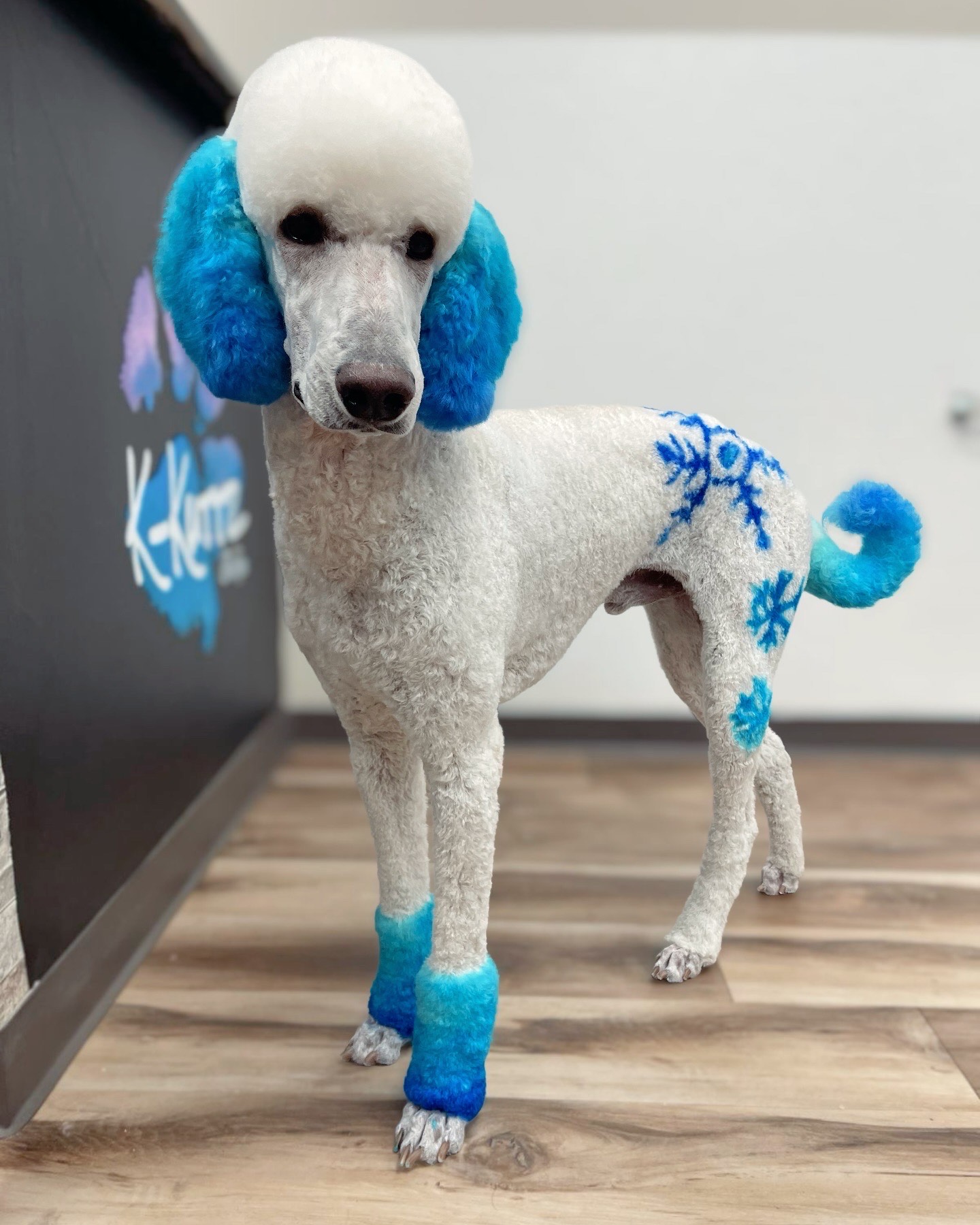
Groomer: Danielle Costea
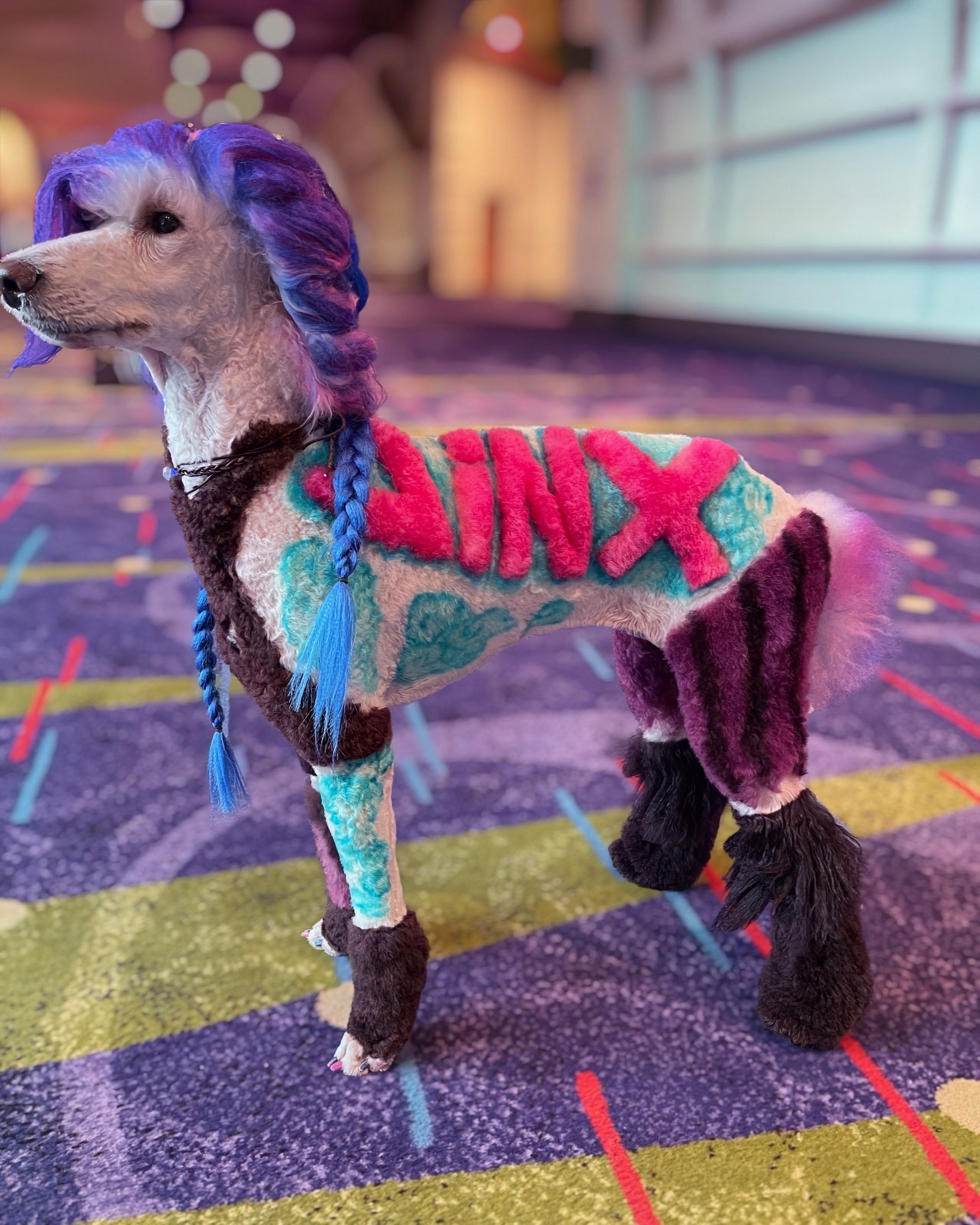
Groomer: Danielle Costea
Modern Animal Dye Systems and the Evolution of Safety
The Evolution of Dye Safety
Creative grooming could not have matured into a professional art form without parallel advances in safety. Modern creative grooming products achieve vibrant, lasting color while strictly avoiding harsh chemicals found in traditional human hair dyes, including:
- Ammonia
- Hydrogen Peroxide
- PPD (para-phenylenediamine)
- Resorcinol
Instead, contemporary pet dye systems rely on:
- Food-grade pigments
- Plant-based colorants and extracts
- Gentle cosmetic-grade carriers
- Low-irritation processes designed specifically for animal skin and coat
Leading Professional Creative Grooming Dye Brands
Modern creative grooming relies on pet-specific products developed for safety and performance. Widely used professional brands include:
- OPAWZ – global market leader offering temporary, semi-permanent, and permanent pet dye systems
- Crazy Liberty – semi-permanent dyes using gentle cuticle-opening technology
- Funky Avatar – conditioning-focused semi-permanent dyes with coat-supporting ingredients
- Dyex – high-concentration pigment systems designed for controlled dilution
- Pet Esthé (Japan) – safety-first professional grooming products incorporating gentle formulations
- Dog Color (Chile) – vibrant pigments, pet-safe formulations, and emphasis on coat health
These brands reflect an industry-wide commitment to species-appropriate chemistry and coat health.
How Pet Dyes Differ from Human Hair Dyes
Modern pet dyes differ fundamentally from human hair dyes in formulation, mechanism, and intent. They are designed to deposit color gently, temporarily, and reversibly without permanently altering the hair structure or compromising skin health.
Defensive Ethics of Creative Grooming
Creative grooming is frequently scrutinized through an ethical lens. A responsible defense rests on animal welfare, behavioral consent, professional standards, and historical context.
Ethical creative grooming is:
- Performed by trained professionals
- Conducted using pet-specific, non-toxic products
- Continuously monitored for comfort and stress
- Temporary, non-invasive, and reversible
- Ethics are determined not by aesthetics, but by process, intent, and welfare outcomes.
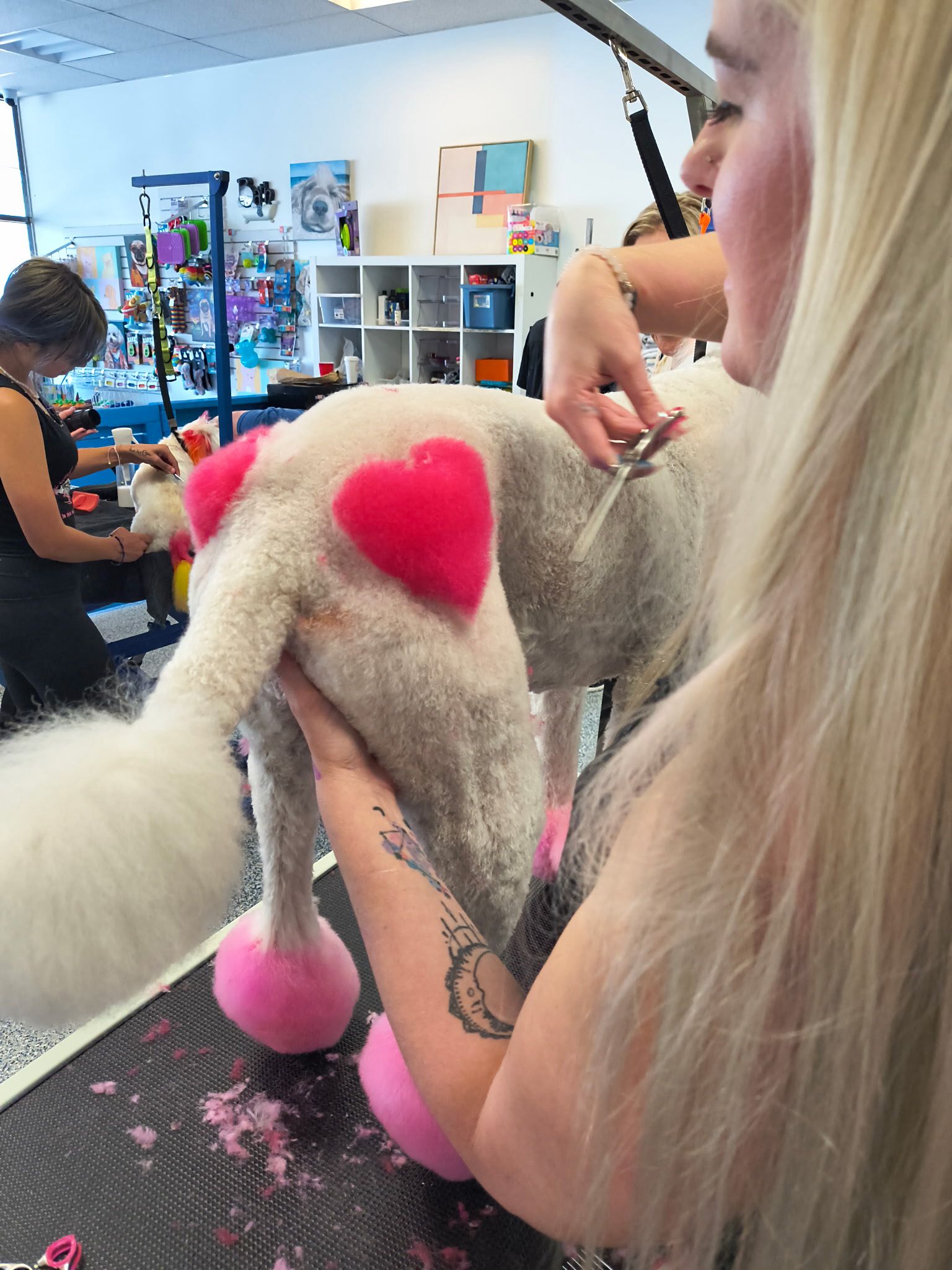
Groomer: Danielle Costea, demonstrating coat carving with a pink dyed heart on a poodle.
Q&A: Understanding Creative Grooming
What is creative grooming?
Creative grooming is professional pet grooming that goes beyond traditional styles, using pet-safe dyes, sculptural clipping, and accessories to create artistic designs for competitions, events, or personal expression.
Creative grooming is professional pet grooming that goes beyond traditional styles, using pet-safe dyes, sculptural clipping, and accessories to create artistic designs for competitions, events, or personal expression.
Is creative grooming safe?
Yes—when performed by trained professionals using products formulated specifically for animals, with the pet’s comfort and well-being as the priority.
Yes—when performed by trained professionals using products formulated specifically for animals, with the pet’s comfort and well-being as the priority.
Why do people engage in creative grooming?
Creative grooming celebrates a pet’s personality, strengthens the human–animal bond, and allows for artistic collaboration between groomer and pet parent.
Creative grooming celebrates a pet’s personality, strengthens the human–animal bond, and allows for artistic collaboration between groomer and pet parent.
Who is an ideal candidate?
Pets that are calm, tolerant of grooming, and comfortable with handling. Professionals assess suitability and introduce creative elements gradually.
When should creative grooming not be done?
If a pet shows signs of stress, anxiety, skin sensitivity, or discomfort, creative grooming is not appropriate. Welfare always comes first.
How are pets’ voices respected?
Through continuous observation of body language and behavior. Ethical groomers stop immediately at any sign of distress.
How do pets progress to advanced creative grooming?
Advanced designs are built over time, following repeated positive experiences with simpler creative elements.
How does creative grooming strengthen bonds?
It transforms grooming into a shared, positive experience that deepens trust between pets, groomers, and pet parents.
Industry Leadership and Accountability: The Role of the GCGA
The Global Creative Grooming Association promotes animal welfare as the foundation of creative grooming. It supports the industry through education on safe and ethical practices, advocacy for pet-specific non-toxic products, emphasis on behavioral consent and stress recognition, and certification pathways for trained professionals. The GCGA represents the ethical framework that allows creativity to evolve without compromising animal well-being.
A Continuous Line, Not a Trend
From engraved collars in ancient tombs to sculpted coats and vibrant color today, creative grooming is part of a five-thousand-year continuum of care, creativity, and human–dog connection. Humans shaped dogs for work; modern society reshaped their role. Creative grooming reflects this evolution, offering a meaningful way to bond with dogs. Spanish and Latin American traditions demonstrate that decorative grooming has long been an expression of cultural identity, celebration, and companionship. Modern creative grooming refines history, guided by science, ethics, and respect for animals.
Sources:
With special thanks to Shelby Grillo and Danielle Costea for their feedback and images
World History Encyclopedia. A Brief History of the Dog Collar.
World History Encyclopedia. Dogs: Their Collars in Ancient Mesopotamia.
Wikipedia. Berenice Pet Cemetery.
Wikipedia. Dog Fashion.
Groomer to Groomer. The Shoulders on Which We Stand: History of the All American Grooming Show.
Allure. How to Dye Dog Fur Safely.
Ask Smithsonian: When Did People Start Keeping Pets?
World History Encyclopedia. Dogs: Their Collars in Ancient Mesopotamia.
Wikipedia. Berenice Pet Cemetery.
Wikipedia. Dog Fashion.
Groomer to Groomer. The Shoulders on Which We Stand: History of the All American Grooming Show.
Allure. How to Dye Dog Fur Safely.
Ask Smithsonian: When Did People Start Keeping Pets?